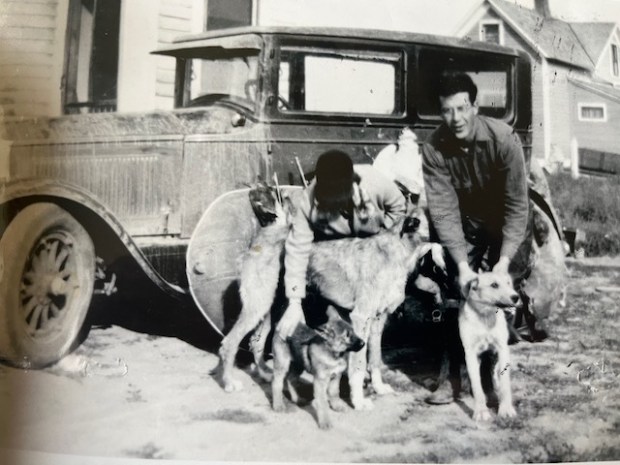
Below is the only photo I’ve ever found of my grandparents together. It was taken when my grandmother returned to the little town of “Sage Prairie” in early September 1928 after spending several weeks with her family in Wisconsin. The back of the photo had a revealing message written in my grandmother’s hand, “My happy family?” The question mark after the quip suggests she and my grandfather had just had an argument. I suspect she’d just told him she was pregnant with their second child creating more grist for the gossip mill. Seven months later, my aunt was born. It’s interesting to note, at that time, my nine-month-old mother was being cared for at the Crittenton Home in Helena.
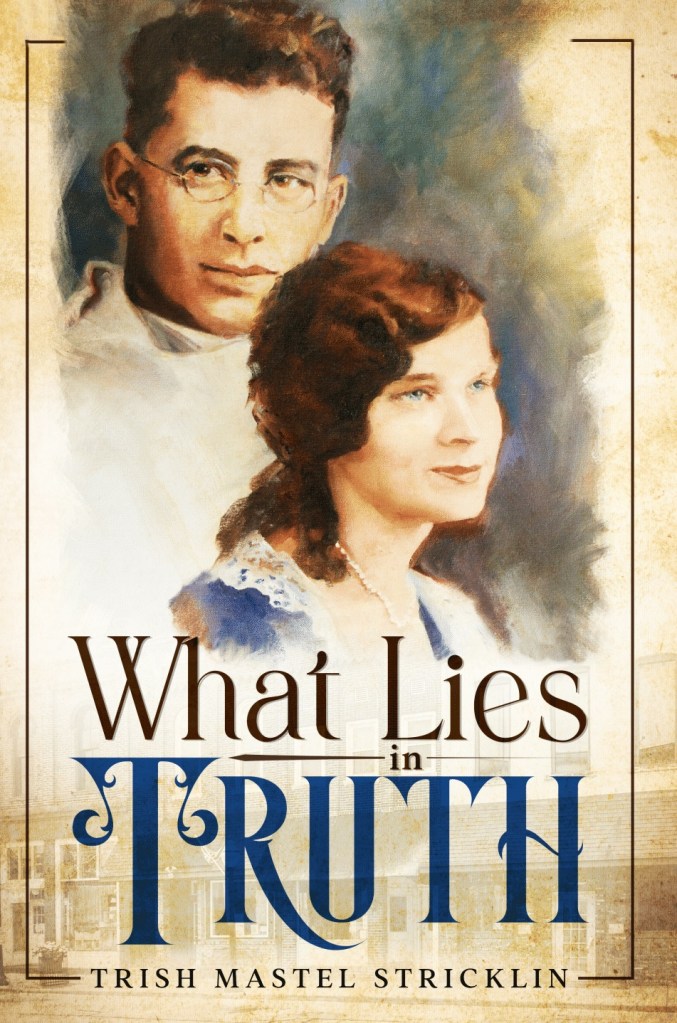
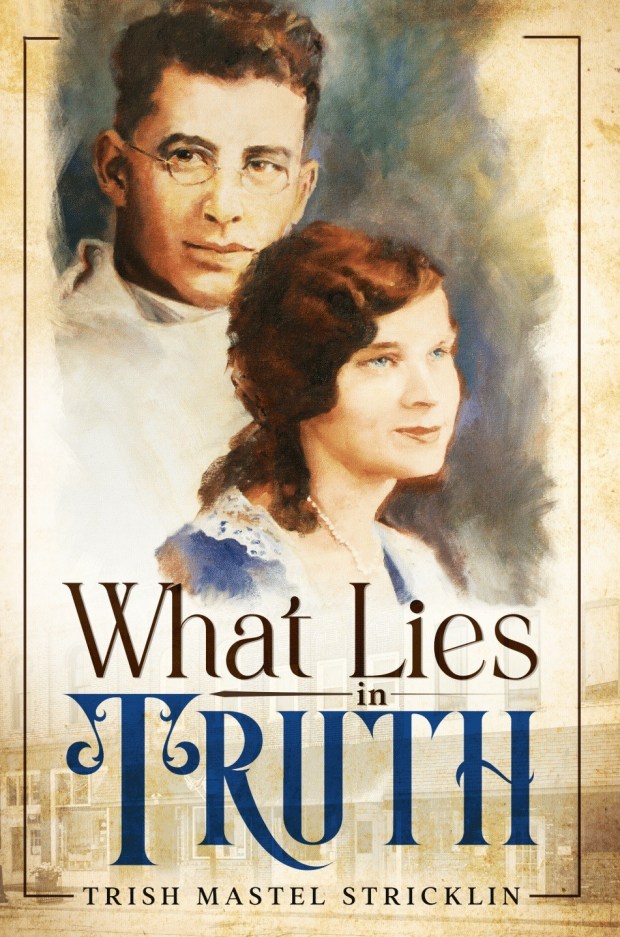
Thanks so much to Ann Raymaker and to the members of her book club affiliated with PEOInternational, Chapter WJ, in Morgan Hill, CA. I had the privilege of spending Face Time with the group after they read my book, WHAT LIES in TRUTH. Because of their questions asking how the truth came to light, I was able to prepare a captivating presentation on that topic to give at my Book Signing and Celebration.
PEO is a philanthropic educational organization where women celebrate the advancement of women and educate them through scholarships, grants, and awards. Interestingly, the PEO’s mission is very similar to the mission of the Florence Crittenton Home where, so many years ago, my unwed grandmother received support during her pregnancy, my mother’s birth, and after for as long as she needed help. For more information on these two wonderful organizations, check out their webpages on the links below.
When Henrietta passed away, we found her old photo album titled “Rogue’s Gallery” in a trove of memorabilia. Among the most intriguing photos are those shown below.
Photos that inspired WHAT LIES IN TRUTH
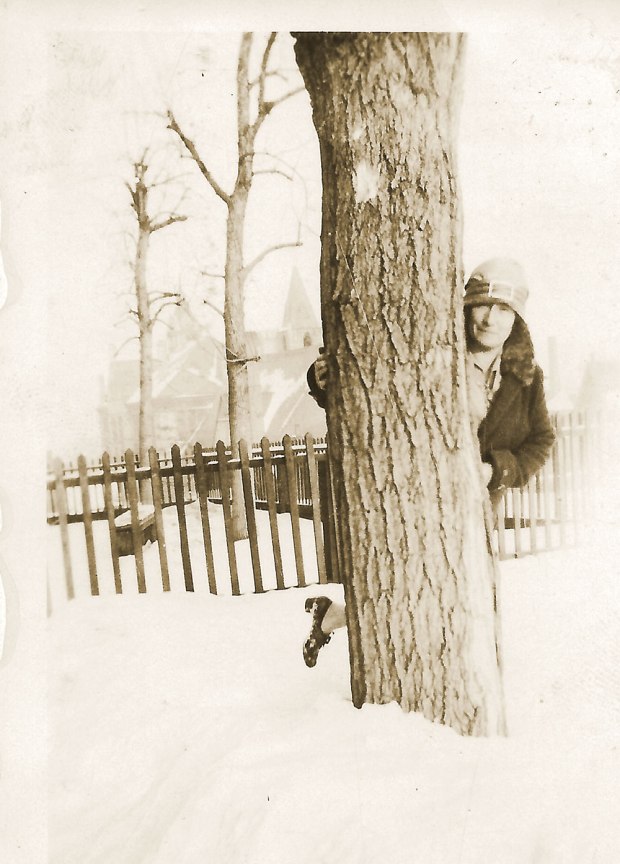
It was a snowy day sometime between Christmas 1927 and New Year’s Day 1928 when Mimi and Henrietta bundled up and headed outdoors for pictures on the Crittenton Home grounds, a safe haven for unwed mothers. I imagine Henri wanted to send photos to her folks in Wisconsin so they’d know she was doing fine. But as an unmarried mother, she couldn’t tell them about her pregnancy. Mimi, her mentor at the Home, having worked with unwed mothers for several years, had some tricks up her sleeve. The photo below is of Mimi showing Henri how to pose while hiding her pregnancy.
Mimi on the Crittenton Home grounds late December 1927
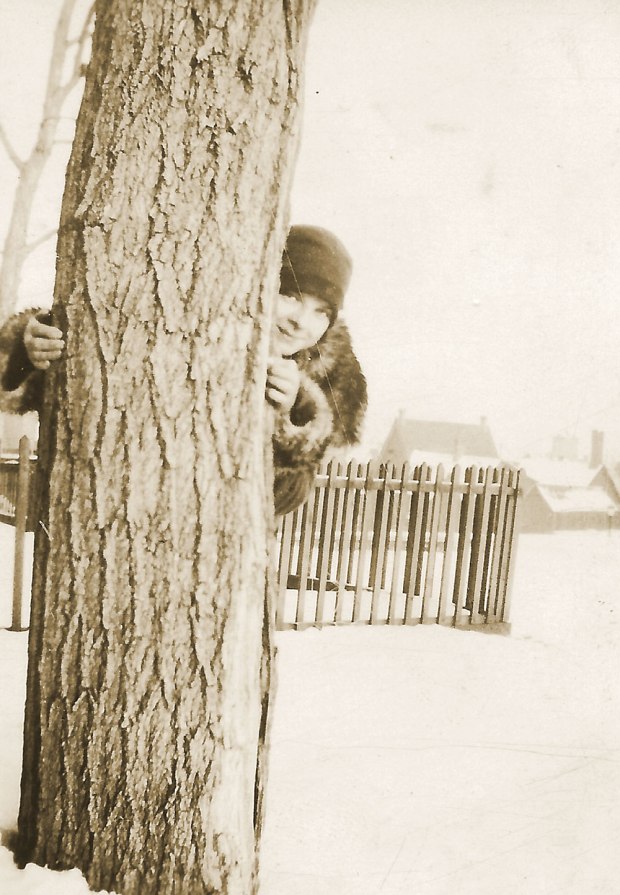
Below is Henri, in her cloche hat and her roguish grin, posed behind the tree, pretending everything is on the up and up. Henri’s first child was born three weeks later on January 18, 1928.
Henrietta , late December 1927
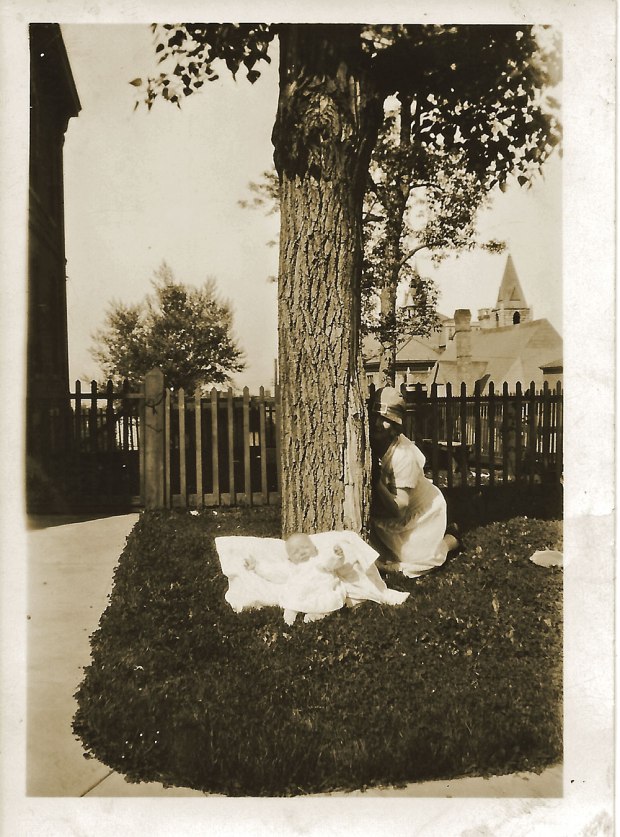
Five months later, Henri returned to the Crittenton Home to have a third photo taken on the same spot with baby Angelica. By then Henri had a fictitious marriage certificate her cousin, a Catholic Priest, had fabricated for her. And the web to hide the truth began to spin.
May, 1928
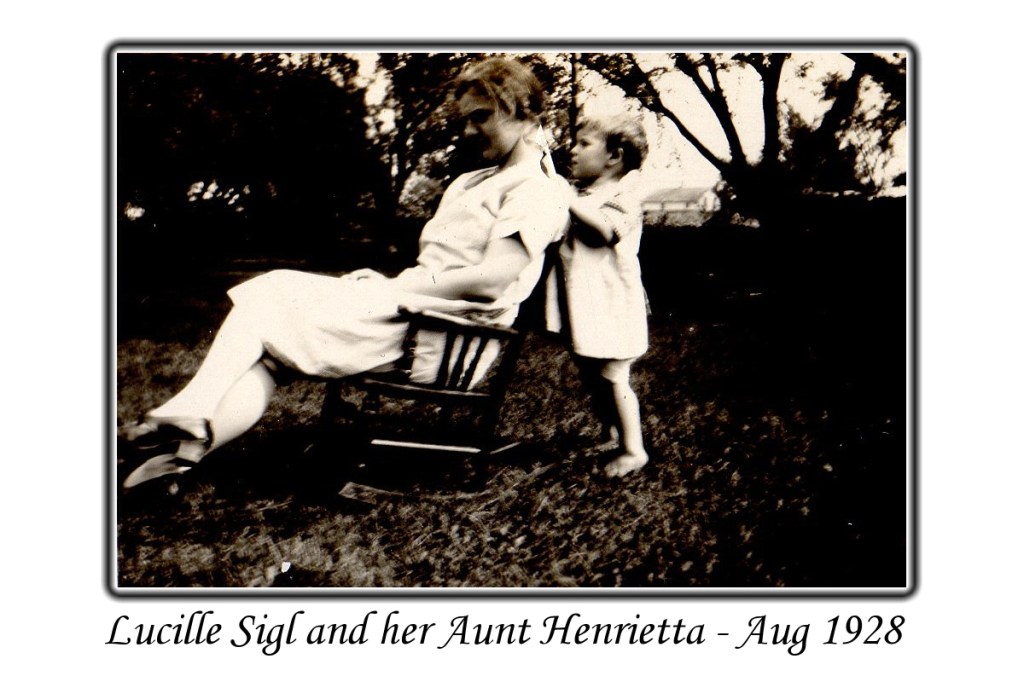
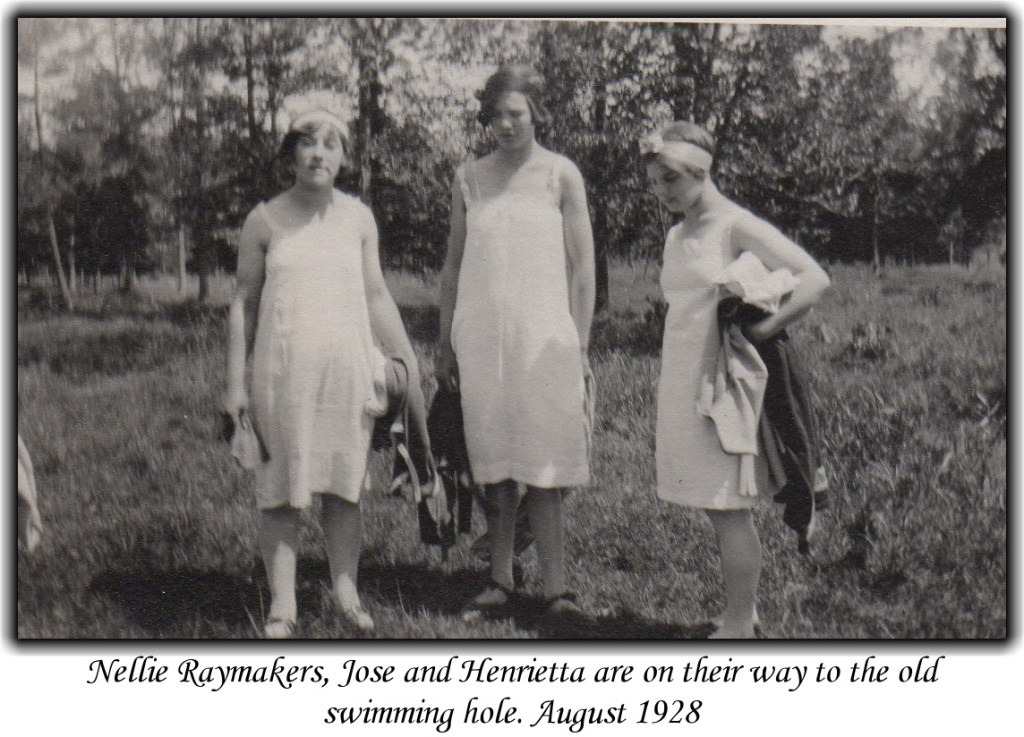
Here are two of the many photos in Henrietta’s “Rogues Gallery” taken when she visited her family in Wisconsin in August 1928.
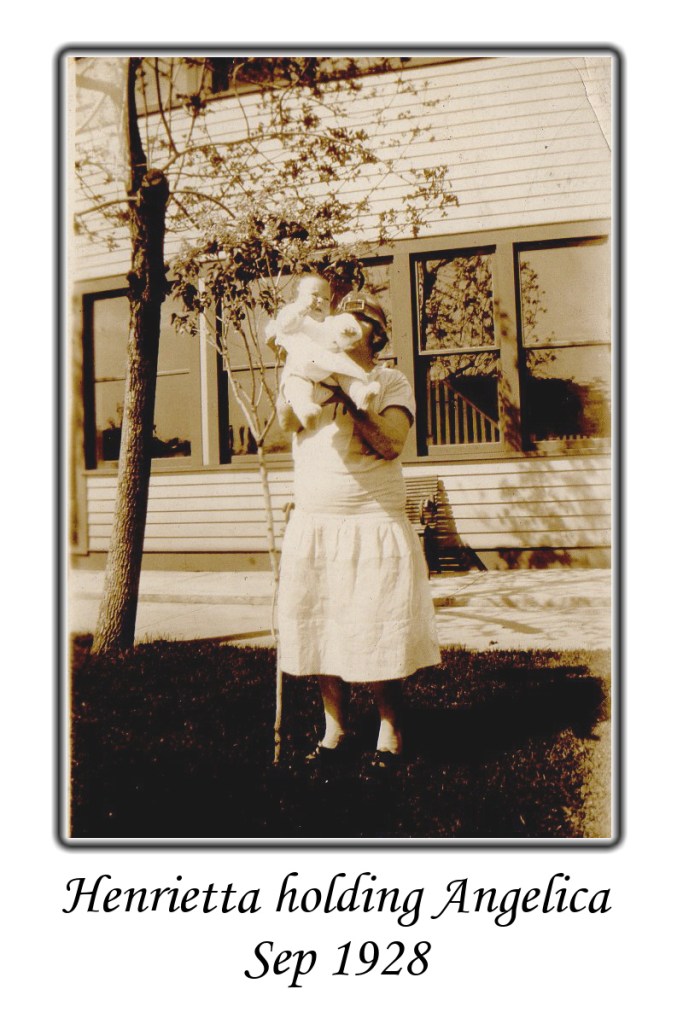
Interestingly, there were no photos of Angelica, who had been born seven months earlier, among those taken during her trip home to Wisconsin. However there was a photo of Henrietta with Angelica taken September of 1928. The surroundings in the picture suggest it was taken in Helena near the Crittenton Home.
Photos that inspired
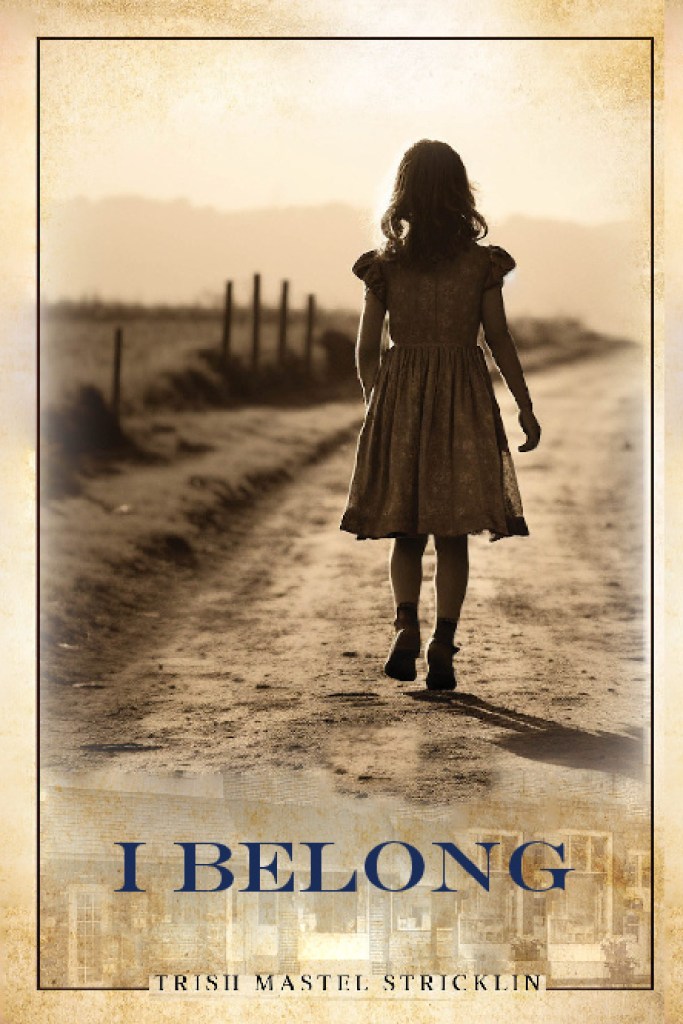
I BELONG
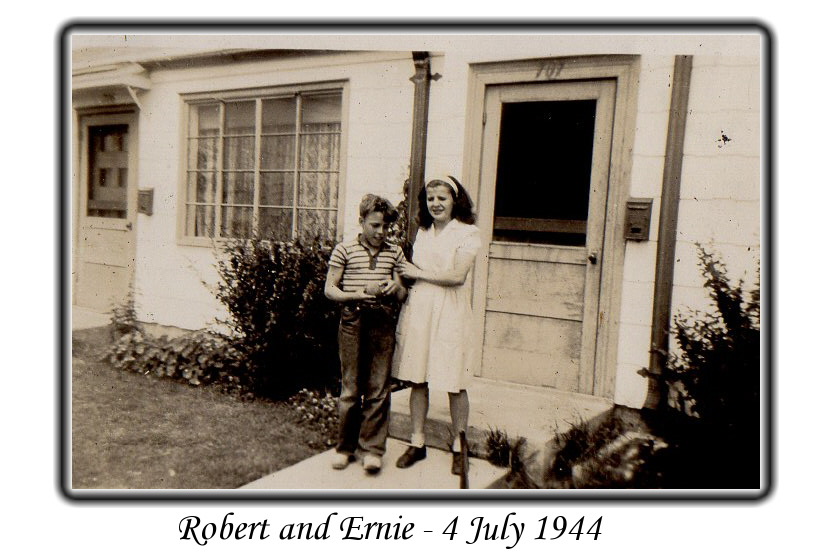
I BELONG begins as Henrietta and her children move into a more modern home in Parkdale, Great Falls, Montana.
Quote from Ernestine’s poem, “I Am” written in the 1970s as she struggles to find the identity of her father:
Even though my soul I search,
Know this part which is really me,
Can I decipher the dreams I dream,
And know exactly what they mean?
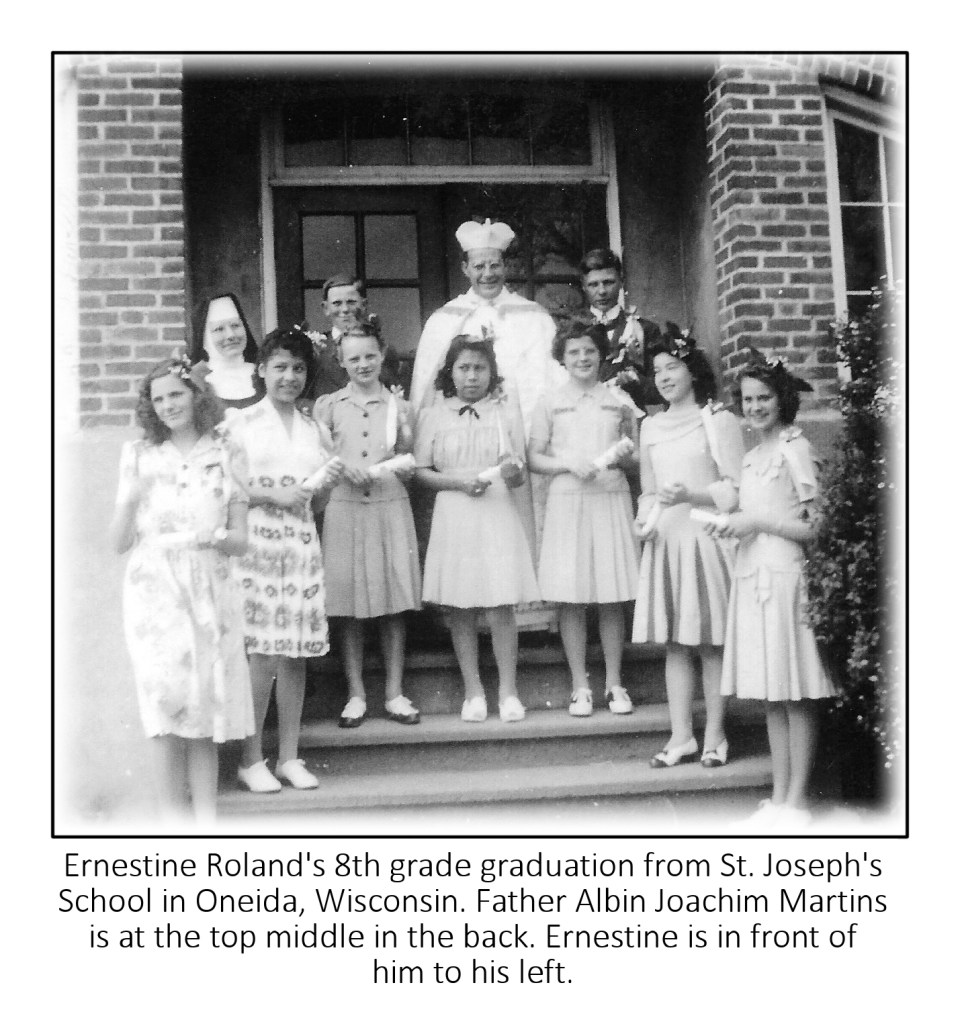
The photo was taken on May 2, 1943 as Ernestine’s year with her grandparents is about to end. What happened that year had a profound effect on Ernestine’s life. Notice the expression on Father M’s and Ernestine’s faces.
Quote from Ernestine’s poem, “I Am” written in the 1970s as she struggles to find the identity of her father.
My grandmother played a big role in my life. I knew her well and loved her deeply. But my grandfather was always a mystery, and Grandmother told us very little about him. She honored us with a few truths and peppered them with lies. Just enough to whet our appetites and hunger for more. She happily shared he had an amazing voice and was a Portuguese aristocrat who had been a part of a failed attempt to replace Portugal’s king on the throne. Turns out those were truths. But she also told us he was a traveling salesman who had died during an influenza epidemic in 1932, and that all the photos of him had been destroyed in a flood. Those details were pure fabrication. After her death, we learned who our grandfather truly was.
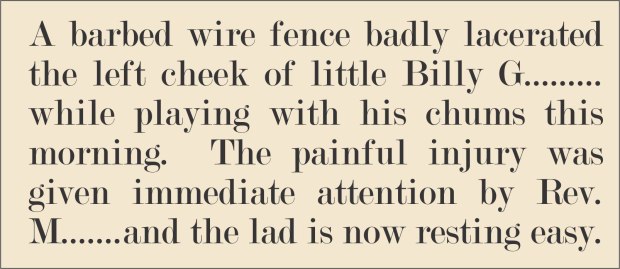
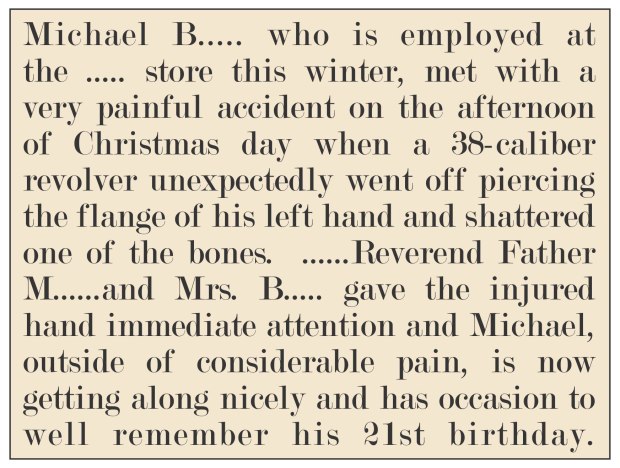
As I wrote WHAT LIES IN TRUTH, I began a search to discover who he was as a man and a priest. Was he kind or callous, arrogant or humble, respected or disliked, competent or inept, forward thinking or content with the status quo? I learned about many of his qualities through little articles printed in small-town newspapers that were the ‘social media’ of the day. One interesting fact that came to light told me his community sometimes depended on him for medical treatment.
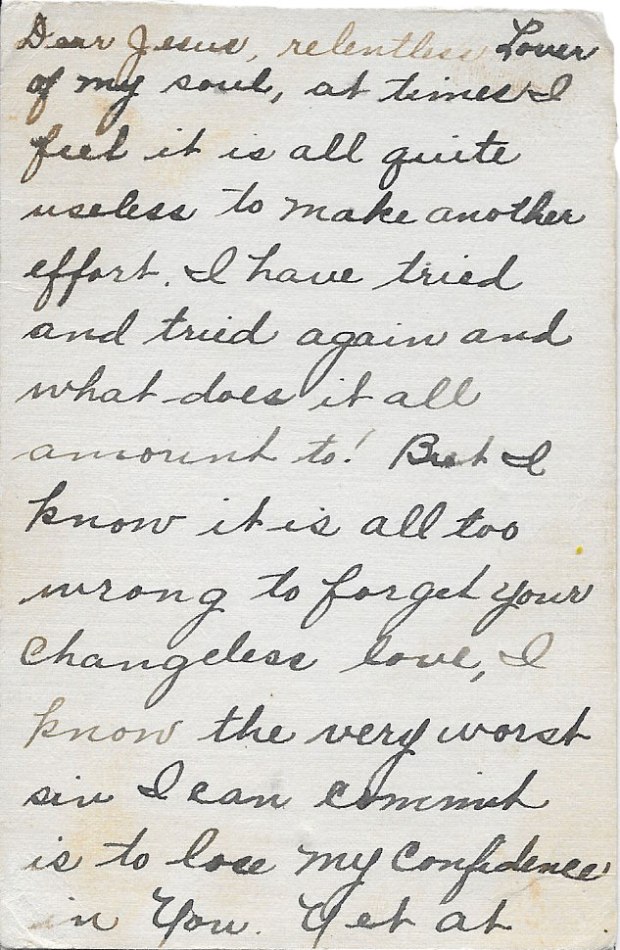
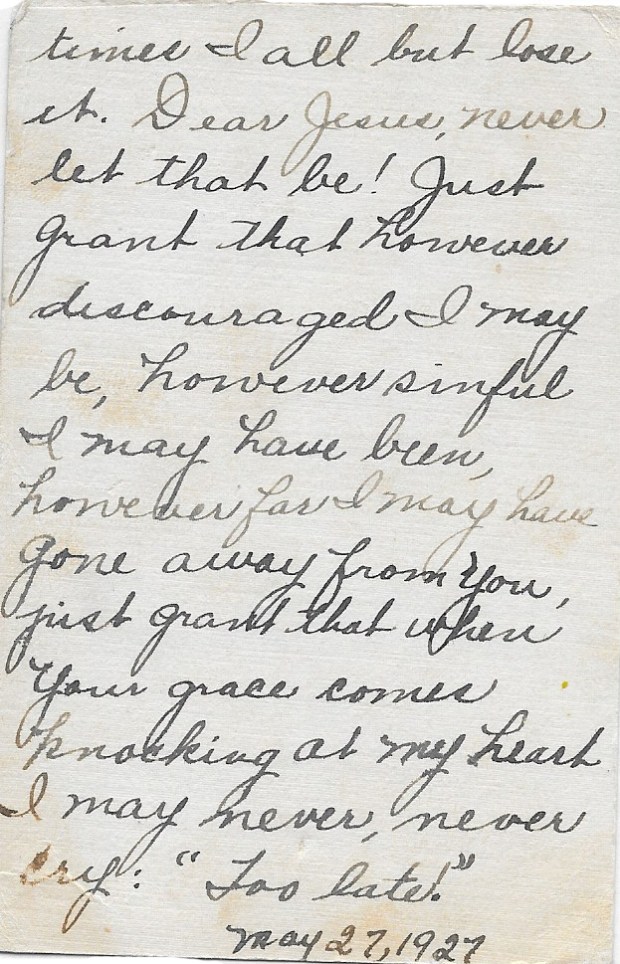
Imagine a young woman in 1927, unmarried and pregnant by the man she loves and who loves her. The couple hide their relationship knowing the Church forbids their affair and bars them from marriage. The young woman can’t conceal her pregnancy much longer but wants to protect the identity of the father who will be ruined if he is discovered. Fear and guilt grip her soul. On May 27,1927 she writes this prayer pouring out her heart. Seven and half months later, their child, my mother, is born. The prayer below, written in Henrietta’s own hand, was found among her memorabilia after her death.
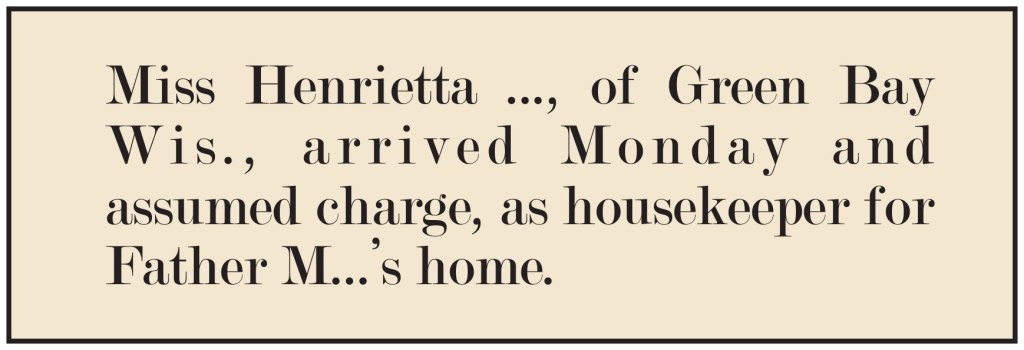
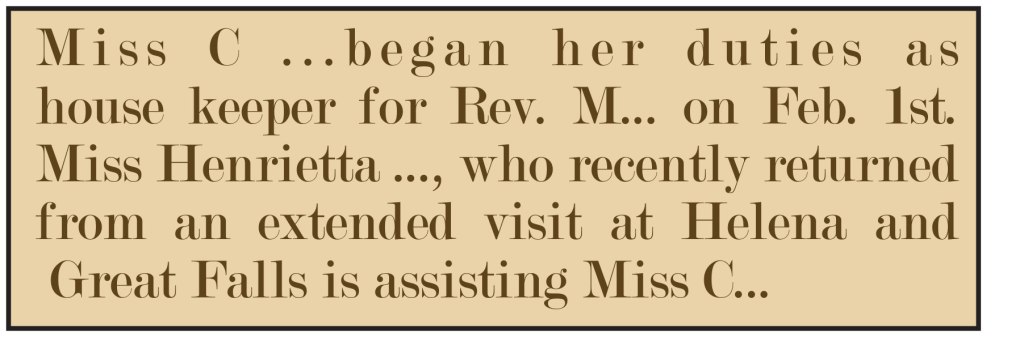
Many details of my grandmother Henrietta and my grandfather lives came to light through old letters, news articles, photos, ancestral documentation, and from the memories of my grandmother’s sister, my great aunt “Greta”. After pleading with my great aunt for the truth, she finally told us Henrietta met my grandfather when she was a servant at the abbey where he was ordained a Catholic Priest, and where he taught in the abbey’s college. He was 31. She was 18. Three years later, in 1927, when my grandfather became the pastor of several parishes in rural Montana, he wrote to her and asked her to be his housekeeper. Glad to be out from under her parent’s control, Henrietta traveled by train to a small Montana town where my grandfather waited at the station, and the path of their lives became intertwined.In those days, the Society Columns in local newspaper served as a kind of social media. In early May of 1927, the little town paper where my grandfather had recently become pastor announced my grandmother’s arrival.
In those days, the Society Columns in local newspaper served as a kind of social media. In early May of 1927, the little town paper where my grandfather had recently become pastor reported:
Newspaper clip from 5 May 1927
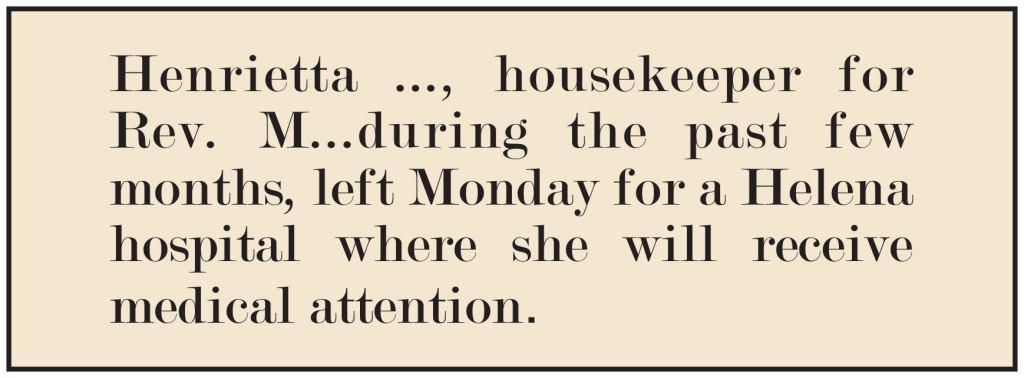
Three months later, Henrietta’s name appeared again in the Social Column.
Newspaper clip from 4 August 1927
My mother, Angelica, was born six months later at St. John’s hospital in Helena, Montana. No father is listed on her birth certificate, and she is labeled as “illegitimate.”
In early February 1928, the little town paper made the following announcement: r.
“Everybody is wonderin’ what and where they all came from.”Iris Dement, lyrics from the song
“Let the Mystery Be“
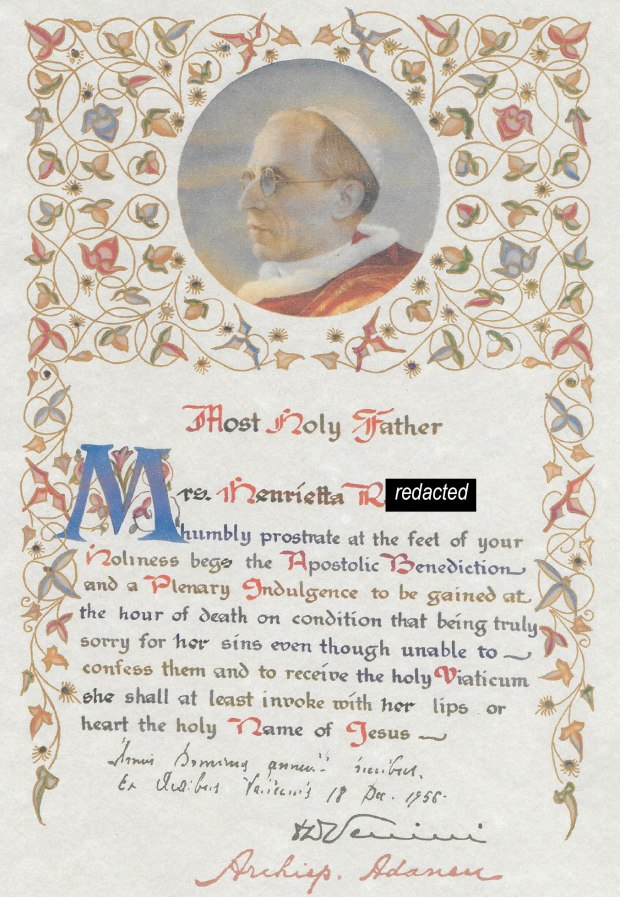
When we discovered the document below in my grandmother’s effects after her death, we thought it was a “Papal Pardon”. It got us ‘wonderin’ what it meant and how and why our grandmother obtained it. For a long time, before we learned many of the details that informed my book, we thought it meant she had never been able to confess her secret relationship with our grandfather, perhaps out of fear that her confession would bring disastrous consequences to them and to their children. As a Catholic, Grandmother must have believed her affair with our grandfather was a ‘mortal sin’, and that she would never be welcomed into heaven with this unconfessed sin on her soul. We thought the ‘pardon’ forgave her unconfessed ‘mortal sin.’ My cousin Matt helped me research the actual meaning of the document. We discovered that a “Plenary Indulgence” effective at the time of death could not be given and eventually fulfilled if one had a ‘mortal sin’ on their soul. Thus, she must have confessed her ‘mortal sin’ at some point in her life.

 A Writer's Trek